
Union Minister for Textiles visits West Bengal, holds key discussions for weaving and handloom development
Press Information Bureau
Government of India
********************
Kolkata, 8 February, 2026
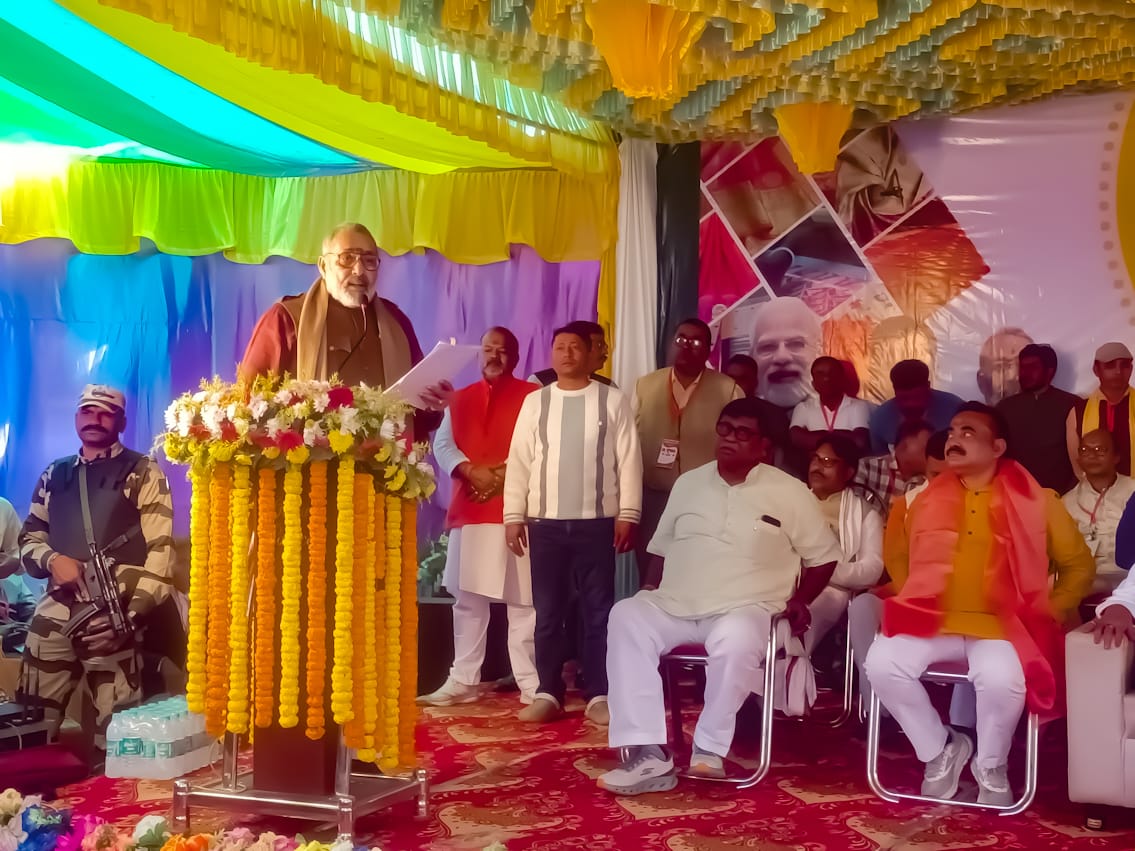
Union Minister for Textiles Shri Giriraj Singh visited West Bengal today, beginning his day in Shantipur, South Nadia, where he held an extensive interaction with weavers and handloom workers. He affirmed that the handloom sector would be actively protected from unfair competition by powerlooms and announced that school uniforms would henceforth be sourced exclusively from handwoven fabric.
The Minister highlighted the importance of GI-tagged sarees such as Shantipuri, Baluchari, and Tangail, while noting that forthcoming trade agreements with the United States and the European Union could significantly expand market access for Bengal’s artisans. He also underscored initiatives under the Mahatma Gandhi Gram Vikas Yojana for stronger marketing linkages and spoke of AI-based quality sampling to improve consistency and global competitiveness, adding that West Bengal is home to nearly seven lakh weavers.
Later in the day, Shri Singh visited Barrackpore, where he met senior officials of CRIJAF, NINFET, and IJIRA at the CRIJAF campus. The discussions focused on integrating new technologies into traditional textile ecosystems to raise productivity, quality and sustainability without eroding artisanal character. Officials briefed the Minister on ongoing research in fibre innovation, design development and climate-resilient practices for handlooms and allied sectors.
Shantipur, long regarded as one of India’s oldest handloom centres, has woven fine cotton sarees for centuries, its traditions shaped by riverine trade routes, artisanal guilds, and a distinctive weaving vocabulary that still defines Bengal’s textile identity. The institutions the Minister visited in Barrackpore carry their own legacy of innovation, with CRIJAF founded to advance jute and allied fibres, NINFET dedicated to training and technology diffusion for handlooms and handicrafts, and IJIRA serving as a national hub for jute research and industrial collaboration. Together, they represent the state’s enduring blend of craft heritage and scientific inquiry as Bengal looks to carry its handloom story forward into a more competitive, technology-driven future.
****************
SSS/RS/ 8.2 26….
